
Mobile Massage: How At-Home Massage Works, What It Costs and How to Book (2026)
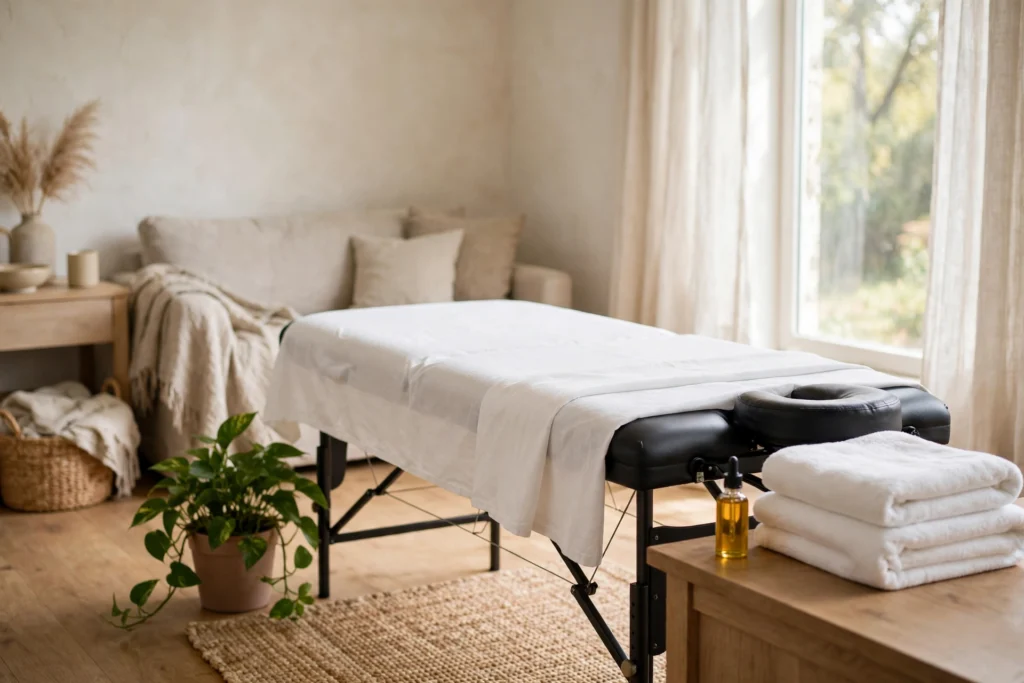
Mobile massage is a professional massage service that comes to you: a licensed therapist arrives at your home, hotel room or office with a portable table, oils and linens, and gives you a full session without you ever leaving the building. Instead of driving to a spa and travelling home again afterwards, you simply clear a quiet corner of a room and let the therapist set up.
This guide explains how mobile massage works, what a session looks like, what it usually costs, and how to choose a qualified therapist.
What Is Mobile Massage?
Mobile massage, sometimes called outcall massage or in-home massage, is the same professional bodywork you would get at a spa or clinic, delivered at a location you choose. The therapist brings everything needed: a folding massage table, clean sheets and towels, and massage oil or lotion. Massage is one of the oldest forms of hands-on care, practised in many cultures for centuries.
A spa visit involves travel in both directions, waiting rooms and shared facilities. A mobile session removes all of that. You stay in your own space, and when the session ends you can rest straight away instead of getting back in a car.
How a Mobile Massage Session Works
If you have never booked one, the process is straightforward. Here is what usually happens.
1. Booking. You choose the session length and massage style, then book online, through an app or by phone. Most providers ask for your address and access details, and some send a short health questionnaire before the visit. Book ahead: good therapists fill their diary days in advance, especially on weekends.
2. Arrival and setup. The therapist arrives with the table and supplies, usually 10 to 15 minutes before the session starts, and sets up in a room with enough space to work around the table.
3. Consultation. Before the massage begins, the therapist asks about your goals, sore areas, pressure preference and any health concerns, injuries or medications. This is the time to mention a bad shoulder, a recent injury, pregnancy or an allergy to a particular oil.
4. The massage. The therapist steps out while you get comfortable on the table, then returns once you are settled under the sheet. Only the area being worked on is uncovered at any time, which is called draping. You can ask for lighter or deeper pressure at any point. Speak up: the pressure should feel good, not painful.
5. Aftercare. When the session ends, the therapist gives you privacy to get dressed, then packs up the table and linens. Many therapists offer simple aftercare advice, such as drinking water and resting for a while.
Types of Mobile Massage You Can Book
Most mobile therapists offer several styles. The right one depends on your goal, your comfort level and any health considerations.
Swedish massage. Long, flowing strokes with light to moderate pressure. This is the standard choice for general relaxation and a good first booking.
Deep tissue massage. Slower, firmer pressure aimed at deeper muscle layers, often chosen for persistent tightness in the neck, shoulders, back or legs. More pressure is not a measure of quality, and the intensity should always be adjusted to your comfort.
Sports massage. Focused work for active people, often around training or recovery.
Prenatal massage. A gentler, adapted style for pregnant clients, usually with side-lying positioning. Only book this with a therapist trained in prenatal work.
Chair massage. A shorter, clothed session on a special chair, popular for offices and events. It usually lasts 15 to 30 minutes and focuses on the neck, shoulders and back.
The Benefits of Mobile Massage
People book mobile massage for practical reasons as much as for relaxation.
No travel, before or after. You skip the drive, the parking and the waiting room. After the session you stay put, which helps the relaxed feeling last.
Comfort and privacy. Your own home is familiar. You control the temperature, the lighting and the music, and there are no strangers in the next room.
Flexible scheduling. Appointments can fit around work, childcare or travel plans, subject to the therapist’s availability. Early morning, lunchtime and evening slots are common.
Good for limited mobility. For older adults, people recovering from injury or anyone who finds travel difficult, home sessions remove a real barrier to regular self-care.
Massage can help ease muscle tension and encourage relaxation. It is not a substitute for medical assessment or treatment, and a trustworthy therapist will say so rather than promise guaranteed results.
What Does Mobile Massage Cost?
Mobile massage usually costs more than a spa visit, because the price includes the therapist’s travel time, fuel and equipment transport. Rates vary by city, therapist experience and session length. The figures below are typical published US ranges for 2026, not fixed prices.
| Session length | Typical US price range |
|---|---|
| 30 minutes | $50 – $75 |
| 60 minutes | $80 – $130 |
| 90 minutes | $140 – $220 |
| 120 minutes | $160 – $260 |
A 60-minute session is the most common booking, and published 2026 guidance generally places it between about $80 and $130 in the United States, although rates in expensive cities can run higher. Longer sessions often give better value per minute, because the therapist covers travel and setup only once.
Before you confirm, ask what the quote includes: travel, setup and any add-ons, and whether a tip is expected on top. Some platforms include the tip in the price; independent therapists usually do not. If the therapist has to travel a long way, a travel fee may apply, so confirm the total before the day.
How to Choose a Mobile Massage Therapist
The therapist’s skill and professionalism decide the quality and safety of the session. A little checking before you book goes a long way.
Check licensing and insurance. In the United States, most states require massage therapists to be licensed, which means completing an accredited training programme and passing a state-recognised exam. Ask for the licence number and check it against your state’s register if one is available. In the UK there is no single statutory licence for massage, so look for membership of a recognised professional body. A professional therapist should also carry liability insurance.
Read reviews and ask around. Look for recent reviews that mention punctuality, cleanliness, communication and pressure. A personal recommendation is worth more than a polished advert.
Ask about experience and specialities. If you want deep tissue work, prenatal massage or help with a specific problem area, ask whether the therapist is trained in it.
Red flags to watch for
- No verifiable licence, training or insurance where those apply.
- No reviews, no website and no way to contact the therapist except an anonymous number.
- Pressure to pay in full, in cash, with no receipt or cancellation terms.
- Vague answers about qualifications, hygiene or what the session includes.
- Any suggestion that the session includes anything beyond professional massage. A professional therapist keeps clear boundaries, and you should end the session if those boundaries are not respected.
How to Prepare Your Home for a Mobile Massage
Preparation is simple, but a few steps make the session run smoothly.
- Pick a quiet room where you can relax without interruptions.
- Clear floor space for the table, roughly 2 by 3 metres, so the therapist can walk around it safely.
- Set the temperature slightly warm, so you stay comfortable while lying still.
- Have clean towels ready if the provider asks for them, and a glass of water for afterwards.
- Wear loose clothing before and after the appointment, so you can change easily.
- Tell the household. Let family or housemates know you need quiet for an hour, and put pets in another room.
You do not need special equipment: the therapist brings the table, linens and oils.
When to Check First Before Booking
Massage is generally safe for healthy adults, but there are situations where you should talk to a doctor or the therapist first. Mention any of these on the intake form: recent surgery, a fracture or serious injury, a blood-clot risk or blood-thinning medication, skin infections or open wounds, a fever, or active cancer treatment.
Do not book a massage as a treatment for a medical condition. If you have ongoing pain, numbness or a new symptom, see a doctor first.
For more on rest at home, see our guide on weekend catch-up sleep. And if you enjoy at-home self-care, our hair treatment guide covers the best at-home treatments for healthy hair. You can also read more about what we publish on the About Us page.
Your First Mobile Massage: A Simple Checklist
- Decide your goal: relaxation, muscle tension, recovery or a first try.
- Choose a session length: 60 minutes is a good starting point.
- Check the therapist’s licence, insurance and recent reviews.
- Confirm the total price, including travel and tip, before the day.
- Pick a quiet room and clear space for the table.
- Fill in the health intake honestly, including injuries and medications.
- Tell the therapist your pressure preference and any areas to avoid.
- Speak up during the session if the pressure is too light or too strong.
- Drink water and rest afterwards instead of rushing into chores.
Frequently Asked Questions
How long does a mobile massage take? A typical session lasts 60 to 90 minutes of hands-on time. Allow an extra 15 to 30 minutes for setup and pack-up, so a 60-minute booking usually takes about 75 to 90 minutes from arrival to departure.
Do I need to provide anything for a mobile massage? Usually very little. The therapist brings the table, linens and oils. You provide a quiet room, enough floor space and, if asked, clean towels.
Is mobile massage safe for a first-timer? Yes, when you book a licensed, insured therapist with good reviews. A professional session starts with a health intake and consultation, uses proper draping, and lets you control the pressure throughout. If anything feels wrong, you can stop the session at any time.
The Bottom Line
Mobile massage takes a familiar service and removes the friction around it. A licensed therapist comes to your door with everything needed, you relax in your own space, and you stay put when it is over. It costs a little more than a spa visit, because you are paying for the therapist’s travel and setup as well as their time, but for many people the convenience and privacy are worth it.
Disclaimer: This article is general information only and is not medical advice. Massage is not a treatment for any medical condition. If you have a health condition, are pregnant, or take medication, talk to a doctor before booking a massage.
Pingback: Custom Apparel: How to Start a Profitable Business in 2026
Pingback: Miley Cyrus Net Worth 2026: The Incredible Story Behind Her $160 Million Fortune