
How Many Black Keys Does a Piano Have? A Complete Guide to the Piano Keyboard
The piano keyboard may look simple at first glance, but every key has a specific purpose that contributes to the instrument’s wide musical range. One of the most common questions asked by beginners, students, and music enthusiasts is how many black keys does a piano have. Understanding the arrangement of black and white keys makes learning the piano much easier and helps you recognize notes, scales, and chords with confidence.
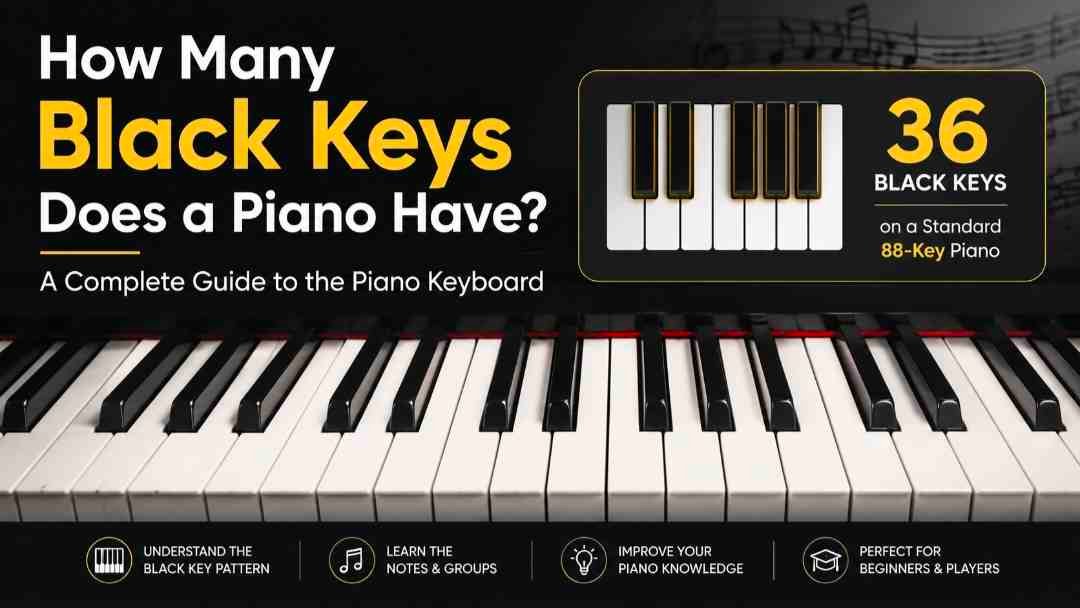
A standard modern acoustic piano features 88 keys in total. These include 52 white keys and 36 black keys, covering a range from A0 to C8. The black keys are grouped in repeating patterns of two and three across the keyboard, making it easier for players to identify notes by sight and touch.
Understanding the Standard Piano Keyboard
A full-size piano is carefully designed to provide balance between low, middle, and high notes. While white keys represent the natural notes, the black keys produce the sharp and flat notes that complete the chromatic scale.
If you have ever wondered how many black keys does a piano have, the answer is 36 on a standard 88-key piano. These keys are slightly raised above the white keys, allowing musicians to move comfortably between different notes while playing.
The repeating layout of two black keys followed by three black keys is one of the easiest ways to navigate the keyboard. This pattern remains consistent from one end of the piano to the other.
Why Are Black Keys Raised?
The raised design improves playing accuracy and allows pianists to reach both white and black keys without confusion. It also makes it easier to identify note positions by touch without constantly looking at the keyboard.
Why Black Keys Are Important in Music
Although there are fewer black keys than white keys, they are just as important in music. They represent accidentals, commonly known as sharps (#) and flats (♭), which are essential for creating melodies and harmonies in different musical keys.
Many famous piano compositions rely heavily on black keys. They allow musicians to perform in major and minor scales beyond the basic natural notes. Without them, countless classical, jazz, blues, and contemporary pieces would not be possible.
For beginners, learning the location of the black keys is often the first step toward understanding scales, intervals, and chords.
Different Piano Sizes and Black Key Count
Not every keyboard has the same number of keys. Digital pianos and portable keyboards are available in several sizes to suit different needs.
An 88-key piano has 36 black keys, while smaller keyboards have fewer because they cover a shorter musical range. For example, a 76-key keyboard includes fewer black keys, and a 61-key keyboard reduces the count even further.
When purchasing a piano, choosing a full-size keyboard is usually recommended for students who plan to develop proper technique and prepare for advanced music.
Despite these differences, manufacturers maintain the familiar grouping of two and three black keys, ensuring that every keyboard feels consistent regardless of size.
Learning to Identify Black Keys Quickly
Recognizing black keys is one of the easiest ways to navigate a piano keyboard. Instead of counting every key, musicians use the repeating groups of two and three black keys as visual landmarks. The white key immediately to the left of the two black keys is C, while the white key between the two black keys is D. This simple pattern repeats across the entire keyboard.
If you are still asking how many black keys does a piano have, remember that a standard 88-key piano always includes 36 black keys. Knowing this layout helps beginners find notes faster, improve hand placement, and build confidence during practice.
Tips for Beginners
- Learn the repeating pattern of two and three black keys.
- Practice locating C, F, and other notes using the black keys as reference points.
- Play major and minor scales to become familiar with sharp and flat notes.
- Spend a few minutes each day identifying notes without looking at a chart.
- Use a full-size keyboard whenever possible to develop proper finger technique.
Interesting Facts About Piano Black Keys
The design of piano keys has remained remarkably consistent for generations. Modern pianos continue to use the same arrangement because it provides an ideal balance between comfort and musical versatility.
Historically, some antique keyboards were built with different materials and colors, but today’s pianos almost always feature white natural keys and black accidental keys. Whether you play classical, jazz, pop, blues, or film music, the keyboard layout remains universal.
Another interesting fact is that the black keys are slightly narrower and raised above the white keys. This ergonomic design allows pianists to move smoothly across the keyboard and perform complex passages with greater accuracy.
As piano technology has evolved, digital pianos now replicate the same spacing, height, and feel of traditional acoustic instruments, ensuring that players enjoy a consistent experience.
Frequently Asked Questions
Q. How many black keys are on a standard piano?
- A standard 88-key piano has 36 black keys and 52 white keys.
Q. Why are piano keys black and white?
- The contrasting colors help musicians quickly distinguish natural notes from sharps and flats.
Q. Do all pianos have 36 black keys?
- No. Only full-size 88-key pianos have 36 black keys. Smaller keyboards have fewer.
Q. What do the black keys represent?
- They represent sharp (#) and flat (♭) notes that complete the chromatic scale.
Q. Is it important to learn the black keys first?
- Yes. Understanding their pattern makes it much easier to locate notes, learn scales, and improve overall keyboard navigation.
Conclusion:
Understanding how many black keys does a piano have is an important step for anyone interested in learning the piano. A standard piano includes 36 black keys arranged in repeating groups of two and three, making the keyboard easy to navigate once you understand the pattern. These keys play a vital role in producing sharp and flat notes, allowing musicians to perform in every musical key. Whether you are a beginner choosing your first keyboard or an experienced player refining your skills, knowing the purpose and layout of the black keys will strengthen your musical foundation and make playing the piano more enjoyable.