
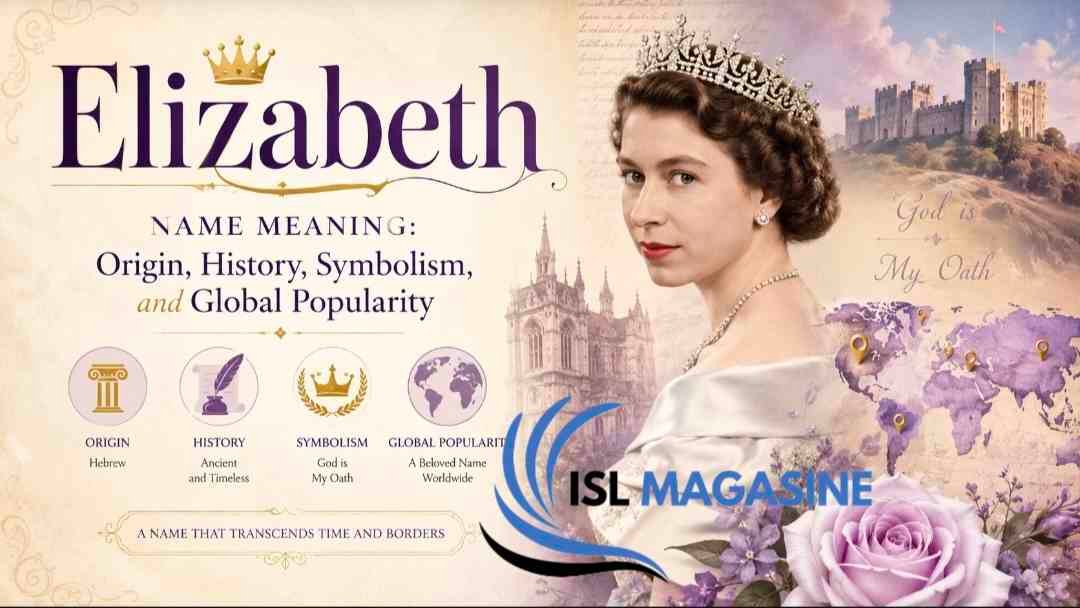
Elizabeth Name Meaning: Origin, History, Symbolism, and Global Popularity
The name Elizabeth is one of the most recognizable and enduring female names in history. It has been used by queens, saints, writers, artists, and millions of families across the world. With a rich historical background and deep spiritual significance, Elizabeth continues to remain a timeless choice for parents seeking a classic and meaningful name.
Understanding the elizabeth name meaning helps reveal why this name has remained popular for centuries. Its elegant sound, historical associations, and positive symbolism make it one of the most admired names in many cultures and languages.
The Origin and Etymology of Elizabeth
Elizabeth has ancient roots that trace back to the Hebrew name Elisheva. The original Hebrew form is commonly interpreted as “God is my oath” or “God’s promise.” This meaning reflects faith, commitment, and devotion, giving the name a strong spiritual foundation.
The name entered Greek as Elisabet and later became Elizabeth through Latin and Old French influences. As Christianity spread throughout Europe, the name gained widespread recognition because of its biblical connections.
Over time, Elizabeth became a respected name among royal families, noble households, and religious communities. Its long history has helped preserve its importance across generations.
Biblical Background
In the New Testament, Elizabeth is known as the mother of John the Baptist and a relative of Mary, the mother of Jesus. She is remembered as a righteous and faithful woman, which contributed significantly to the name’s popularity among Christian communities.
Historical Importance of the Name Elizabeth
Few names have influenced history as much as Elizabeth. Throughout the centuries, numerous queens, princesses, and influential women have carried this name.
One of the most famous historical figures associated with the name is Queen Elizabeth I of England. Her reign during the sixteenth century marked a period of cultural growth, exploration, and political stability often referred to as the Elizabethan Era.
Another notable figure is Queen Elizabeth II, whose reign became one of the longest in British history. Her global influence further strengthened the prestige associated with the name.
The historical significance of these prominent women has played a major role in maintaining the popularity of the elizabeth name meaning among modern families.
Elizabeth in Royal Traditions
Many European royal families adopted Elizabeth because of its dignity and historical reputation. The name became a symbol of leadership, grace, and responsibility, qualities that continue to attract parents today.
Symbolism and Personality Traits Associated with Elizabeth
Names often carry symbolic meanings that shape public perception. Elizabeth is commonly associated with positive qualities such as wisdom, kindness, loyalty, and determination.
People named Elizabeth are frequently viewed as dependable individuals who value honesty and strong relationships. While personality cannot be determined by a name alone, cultural traditions often connect Elizabeth with leadership and compassion.
Some commonly associated traits include:
- Intelligence and curiosity
- Strong moral values
- Confidence and resilience
- Compassion toward others
- Excellent communication skills
These characteristics contribute to the enduring appeal of the elizabeth name meaning across different societies.
In literature and popular culture, characters named Elizabeth are often portrayed as intelligent, independent, and thoughtful individuals, reinforcing these positive associations.
Variations, Nicknames, and International Forms
One reason Elizabeth has remained relevant for centuries is its adaptability. The name has evolved into numerous forms across languages and cultures while retaining its original essence.
Popular nicknames include:
- Liz
- Lizzie
- Beth
- Betty
- Ellie
- Eliza
- Elsa
- Bess
International variations of Elizabeth include:
- Elisabeth (German and French)
- Elizabeta (Eastern European languages)
- Elisabetta (Italian)
- Isabel (Spanish and Portuguese)
- Erzsébet (Hungarian)
- Elisabete (Portuguese)
These variations demonstrate the name’s remarkable ability to adapt while maintaining its historical identity.
The versatility of Elizabeth allows individuals to choose formal, traditional, or modern versions depending on personal preference.
Modern Popularity and Cultural Influence
Despite changing naming trends, Elizabeth remains one of the most consistently used female names worldwide. It frequently appears in baby name rankings across English-speaking countries and continues to be admired for its elegance and heritage.
Several factors contribute to its lasting popularity:
- Rich historical background
- Positive religious significance
- Strong royal associations
- Multiple nickname options
- Universal recognition
The elizabeth name meaning appeals to parents seeking a name that combines tradition with flexibility. Unlike many trend-based names that rise and fall quickly, Elizabeth has demonstrated remarkable longevity.
The name also appears extensively in literature, film, television, and music. Famous fictional characters bearing the name have helped introduce it to new generations while preserving its classic image.
Elizabeth in Literature and Media
Many celebrated works of literature feature characters named Elizabeth. One of the best-known examples is Elizabeth Bennet from Jane Austen’s novel Pride and Prejudice. Her intelligence, wit, and independence have made her one of literature’s most beloved heroines.
Such portrayals continue to strengthen the positive reputation associated with the name and contribute to public interest in the elizabeth name meaning.
FAQ’S
Q. What does Elizabeth mean?
- Elizabeth is generally interpreted as “God is my oath” or “God’s promise,” originating from the Hebrew name Elisheva.
Q. Is Elizabeth a biblical name?
- Yes. Elizabeth appears in the New Testament as the mother of John the Baptist.
Q. Why is Elizabeth considered a royal name?
- Many queens and princesses throughout European history have carried the name, including Queen Elizabeth I and Queen Elizabeth II.
Q. What are common nicknames for Elizabeth?
- Popular nicknames include Liz, Lizzie, Beth, Betty, Ellie, Eliza, and Bess.
Q. Is Elizabeth still a popular baby name?
- Yes. Elizabeth continues to rank among the most respected and widely used female names in many countries.
Q. What personality traits are associated with Elizabeth?
- The name is often linked with intelligence, loyalty, leadership, kindness, and resilience.
Conclusion:
Elizabeth is far more than a simple given name. Its origins in ancient Hebrew tradition, biblical importance, royal legacy, and widespread cultural influence have made it one of the most enduring names in history. From religious texts and royal courts to modern literature and contemporary society, Elizabeth has maintained its reputation for elegance, strength, and timeless appeal.
For anyone exploring the history of names, the elizabeth name meaning offers a fascinating journey through language, culture, faith, and tradition. Its enduring popularity demonstrates how a meaningful name can remain relevant and admired across centuries and generations.