
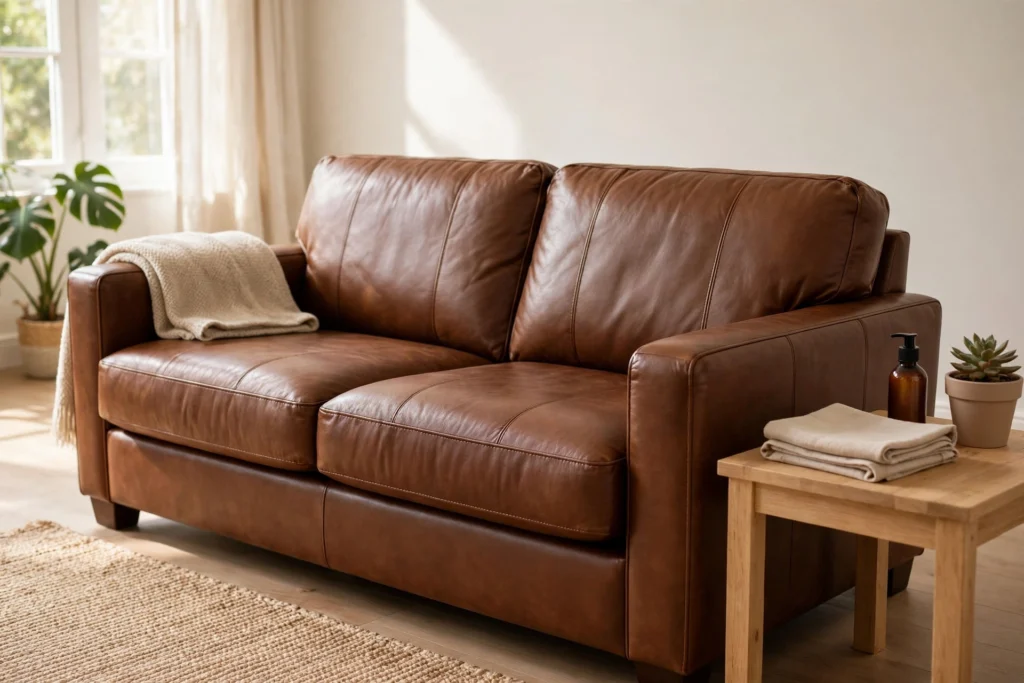
Leather Cleaning: How to Clean Leather Sofas, Jackets and Bags at Home (2026)
Leather cleaning is simpler than most people think. With the right method and a few basic supplies, you can keep a leather sofa, jacket or bag looking good for years. Leather is a natural material, and like skin, it needs gentle care: regular cleaning, occasional conditioner, and protection from heat and harsh chemicals.
The most common mistake is reaching for whatever spray is under the sink: all-purpose cleaners, bleach, ammonia and even vinegar can strip the finish and leave leather stiff and cracked. A proper routine takes less than half an hour.
Know Your Leather Before You Clean It
The right leather cleaning method depends on the type you own, so check the care tag first.
Full-grain is the top layer of the hide, grain intact — the toughest type. It handles mild soap and conditioning well but can darken if soaked.
Top-grain is lightly sanded and finished, smoother and a little more delicate. It is the most common type on sofas and chairs.
Aniline has no protective top coat and absorbs water, oil and stains easily. Use only cleaners made for unprotected leather — never soap and water.
Suede and nubuck have a soft, brushed surface and need dry methods only — use a suede brush and eraser, never water or standard cleaners.
Bonded and faux leather are made from scraps with binders, or from plastic. They do not absorb conditioner, so skip it — a damp cloth with a drop of mild soap is enough.
Not sure which type you have? Try the water drop test: put one drop on a hidden spot. If it beads up, the leather is protected; if it soaks in and darkens, it is unprotected — use a cleaner made for it.
Your Leather Cleaning Kit
- Three soft microfibre cloths — one for cleaning, one for wiping, one for conditioning. Paper towels can scratch.
- A soft-bristle brush — for textured leather and dust in seams.
- Mild soap — baby shampoo or castile soap, or a dedicated saddle soap or pH-balanced leather cleaner.
- Leather conditioner — restores the oils cleaning removes and keeps leather soft.
- Distilled water — tap water can leave mineral marks on some leathers.
- Cornstarch or baking soda — for absorbing fresh grease spots.
Skip furniture polish, baby wipes and all-purpose sprays: they can strip the finish or leave a sticky residue that attracts dirt.
How to Clean Leather: The Step-by-Step Method
The leather cleaning process is the same for a sofa, jacket or bag: dust first, spot test, clean in sections, dry naturally, then condition. Never condition dirty leather — it traps grime and stops the conditioner soaking in.
1. Dust and vacuum first
Remove loose dirt with a dry microfibre cloth or soft brush, paying attention to seams and creases. For a sofa, vacuum the crevices and under the cushions — crumbs and grit act like sandpaper every time someone sits down.
2. Spot test every product
Dab a little cleaner on a hidden spot — the back of a cushion, inside a bag strap, under a collar — and wait a few minutes. If the leather changes colour or feels sticky, do not use that product. This two-minute test can save an expensive piece.
3. Clean in small sections
Mix a few drops of mild soap into lukewarm water, or use a leather cleaner as directed. Dip a cloth and wring it until barely damp — it should never drip. Work one section at a time, about the size of a dinner plate, in gentle circles, top to bottom. Wipe again with a cloth dampened with plain water, then dry with a soft towel. Never pour solution directly onto the surface.
4. Let it dry naturally
Never use a hairdryer, radiator or direct sunlight — heat shrinks, stiffens and cracks leather. Leave it in a ventilated room at room temperature until fully dry, usually one to two hours for a sofa, and condition only then.
5. Condition to restore softness
Conditioner is not optional: cleaning removes natural oils, and conditioner puts them back, keeping leather supple and preventing cracks. Rub a small amount in with a soft cloth in circular motions, let it soak in, then buff off the excess. Condition every six to twelve months — more often for pieces near windows or heaters, or items in daily use.
6. Protect the finish
For shoes, bags and outdoor furniture, finish with a protector or waterproofing spray for your leather type, applied only after cleaning and conditioning. Suede needs its own protector spray.
How to Clean a Leather Sofa
Weekly: Wipe with a dry cloth and vacuum the crevices. Five minutes stops dust and crumbs grinding into the finish.
Monthly: Do the soap-and-water wipe above, section by section from the top down, then wipe with plain water and dry as you go.
Every six to twelve months: Condition the whole sofa, paying extra attention to armrests and seat cushions.
Placement matters: Keep it at least two feet from radiators and heat vents, and out of direct sunlight, which dries leather out and fades the colour. Rotate the cushions so they wear evenly. A tidy, calm living space also helps you rest better — see our guide on weekend catch-up sleep.
How to Clean a Leather Jacket
Check the care label first — some jackets need professional cleaning. Hang it on a wide, padded hanger so it keeps its shape, then wipe it all over with a barely damp cloth, paying extra attention to the collar, cuffs and pockets, where body oils collect. For light dirt, use a little saddle soap or mild soap solution in small circles, then wipe off the lather with a clean damp cloth.
Dry it naturally on the hanger, away from heat and sunlight. Condition lightly once or twice a year — too much can leave the leather greasy. Never machine wash, tumble dry or iron it. If it gets soaked in rain, let it dry slowly at room temperature and condition it once dry.
Cleaning Leather Bags and Shoes
Bags: Empty it completely and shake out the dust. Wipe the outside with a damp cloth, clean with a little leather cleaning solution, dry, and condition. Stuff it with tissue paper while it dries so it holds its shape, and store it in a dust bag.
Shoes: Brush off dried mud first — never wipe wet mud, which spreads it. Clean with a damp cloth and mild soap, dry naturally stuffed with newspaper or shoe trees, then condition and polish if the leather type allows it.
Removing Common Stains
Act quickly, and always blot — never rub, which pushes a stain deeper and damages the finish.
- Fresh spills: Blot immediately with a dry cloth. Do not add water to aniline leather.
- Water marks: On protected leather, a mark often disappears once dry. If it remains, dampen the whole panel evenly and let it dry.
- Grease: Blot, then sprinkle cornstarch or baking soda on the spot and leave it for several hours or overnight. Brush off and repeat if needed.
- Ink: On protected leather only, dab with a cotton swab dipped in a little rubbing alcohol, after testing on a hidden spot. Ink on aniline or suede is a job for a professional.
- Food: Scrape off solids with a blunt knife, blot, then clean with a mild soap solution and dry.
If a stain does not lift after two gentle leather cleaning attempts, stop — repeated scrubbing damages the finish, and a professional can usually remove it.
What Never to Use on Leather
Bleach and ammonia cleaners strip the finish. Vinegar, even diluted, is too acidic for most leather. All-purpose sprays and furniture polish leave residues that attract dirt. Baby wipes contain chemicals not made for leather. Solvents dissolve the finish and dye, and abrasive sponges scratch the surface permanently. If a product is not made for leather, do not put it on leather.
How Often Should You Clean Leather?
- Weekly: Dust sofas and wipe high-touch items with a dry cloth.
- Monthly: Wipe sofas and chairs with a barely damp cloth; spot-clean jackets and bags.
- Every three to six months: Deep clean items in daily use.
- Every six to twelve months: Condition everything; more often near windows or heaters.
- After rain or a spill: Dry naturally, then clean and condition once dry.
Leather kept on this leather cleaning schedule can last decades. Ignored leather dries out, cracks and fades — and once deep cracks appear, no conditioner can undo them.
Frequently Asked Questions
Can I clean leather with soap and water?
Yes, for protected (finished) leather: a few drops of mild soap in lukewarm water is safe and effective for leather cleaning. Use a barely damp cloth, work in sections, and wipe off the soap afterwards. Do not use soap and water on aniline leather, suede or nubuck — they need specialist cleaners or dry methods.
How do I keep my leather sofa from cracking?
Clean it monthly, condition it every six to twelve months, and keep it out of sunlight and away from radiators. Cracking is almost always caused by dryness, and once deep cracks form they cannot be reversed — so prevention is the only real fix.
Is it safe to use vinegar on leather?
No. Even diluted vinegar is too acidic for most leather types and can damage the finish. Use a mild soap solution or a pH-balanced leather cleaner instead.
Your Leather Cleaning Starter Plan
- Gather three microfibre cloths, a mild soap and a leather conditioner.
- Pick one item — the sofa, a jacket or a bag — and dust it thoroughly.
- Spot test your cleaner on a hidden area and wait a few minutes.
- Clean the item section by section, then let it dry naturally.
- Apply conditioner, let it soak in, then buff off the excess.
- Set a calendar reminder: monthly wipe, conditioner in six months.
That first leather cleaning session usually takes less than an hour, and the difference is visible straight away. For more practical home and lifestyle guides, browse our Lifestyle category or read more about ISL Magazine.
The Bottom Line
Leather cleaning rewards the right method: identify the type, dust before you wet anything, test every product on a hidden spot, clean in small sections, dry naturally, and condition afterwards. Avoid heat, harsh chemicals and shortcuts.
A well-kept leather sofa, jacket or bag gets better with age — the surface develops a rich patina, the colour deepens, and the item becomes more comfortable the more you use it. That only happens with regular, gentle care, so start with one item this weekend.
This article is general information about leather care, not professional advice. For valuable, damaged or antique leather, or stains that do not respond to gentle cleaning, consult a professional leather cleaner.